 1 (833) 453-5643
Ever wondered how much it actually costs to get a keloid removed? If a raised scar has been causing discomfort, drawing unwanted attention, or affecting your confidence, it’s completely normal to want clear answers. Keloid removal costs can vary quite a bit depending on the type of treatment used and your specific case, and understanding what influences the price can help you make a confident, informed decision.
Key Takeaways
- Keloid treatment may cost from a few hundred dollars to $3,500 or more, depending on the procedure and case complexity.
- Steroid injections, cryotherapy, and laser treatments are usually priced per session, while surgery is generally priced per procedure.
- Multiple sessions or combined treatments may increase the total cost beyond the price of one treatment.
- Insurance coverage depends on the health plan, medical necessity, required documentation, and prior authorization.
- Treatment results vary, and no procedure can guarantee that a keloid will not return.
How Much Does It Cost to Get a Keloid Removed?
Keloid removal may cost anywhere from a few hundred dollars to approximately $3,500, depending on the treatment method and complexity of the case, according to WebMD. Surgical excision generally costs more than nonsurgical treatments, particularly when it is combined with additional therapies such as radiation.
Estimated treatment costs may include:
- Steroid injections: $100–$300 per session.
- Cryotherapy: $100–$500 per session.
- Laser treatments: $300–$1,500 per session.
- Keloid removal surgery: $1,000–$3,500 or more.
Additional factors like the number of sessions needed and the location of the practice can also affect the final cost. Because treatment plans are highly individualized, the final keloid removal price is best determined during an in-person consultation.
Factors Influencing the Cost of Keloid Scar Removal
The cost of keloid scar removal isn’t one-size-fits-all—it can vary significantly based on a range of individual and procedural factors. Understanding what influences the price can help you plan and avoid surprises. From the complexity of the scar to the specialist’s credentials, each detail plays a role in shaping your overall investment in treatment.
Keloid Size and Shape
The size and shape of a keloid are major factors in determining removal costs. Larger or irregularly shaped keloids, including those on the ear or earlobe, often require more complex treatment plans, which may increase the complexity and overall cost of treatment. For instance, a small, flat keloid may be managed with corticosteroid injections alone, while a bulky, raised one might need surgery followed by radiation. These differences can significantly impact both the number of sessions required and the overall cost, making an individualized treatment assessment essential for an accurate price estimate.
Surgeon’s Experience
The expertise and qualifications of your surgeon can influence treatment planning, procedural safety, and follow-up care. A board-certified specialist with experience treating keloids may be better equipped to evaluate complex or recurrent scars and recommend an appropriate combination of treatments. However, treatment outcomes vary, and no surgeon or procedure can guarantee that a keloid will not return, as the American Academy of Dermatology notes that treatment results vary and no treatment consistently prevents recurrence.
Geographical Location
Where you live can have a noticeable impact on the keloid removal price. Clinics in large metropolitan areas or regions with a high cost of living, such as New York, Los Angeles, or Miami, generally charge more than those in smaller towns or rural locations. This is due to higher overhead costs, demand for specialized services, and market competition. Additionally, access to advanced technologies and highly experienced specialists may vary by location, which can also affect pricing and treatment availability.
The Recovery Process
Recovery time and post-treatment care can affect the overall cost of keloid removal. Procedures such as surgical excision or radiation therapy may require follow-up visits, prescription medications, wound-care products, or time away from work. Patients should also account for any recommended postoperative treatments or monitoring. Following the physician’s aftercare instructions can support proper healing and help patients complete the recommended recurrence-prevention plan.

Leading Experts in Keloid Plastic
Surgery in Miami Beach
Keloid Removal Costs by Treatment Option
Each keloid removal method comes with its own price range, depending on the procedure’s complexity, the technology used, and the number of sessions required. Understanding the cost differences between treatment options can help you choose the most appropriate plan for your needs and budget.
Keloid Removal Surgery Cost
Surgical keloid removal typically costs between $1,000 and $3,500 in the U.S. This cost may include the surgeon’s fee, facility costs, anesthesia, and any necessary follow-up visits. Larger or more deeply embedded keloids may require longer surgery, contributing to a higher price.
Some surgeons also recommend combining surgery with additional treatments like corticosteroid injections or radiation therapy to lower the risk of recurrence, which can add to the total cost. A personalized consultation is the best way to get an accurate cost estimate for your specific case.
Steroid Injections Cost
Corticosteroid injections for keloids typically cost between $100 and $300 per session. Treatment commonly involves several appointments scheduled over time, so the total cost depends on the number of injections recommended.
According to the American Academy of Dermatology, corticosteroid injections may help soften and shrink a keloid, although results vary and the scar may regrow. Injections may also be combined with other treatments as part of an individualized care plan.
Cryotherapy Cost
Cryotherapy for keloid removal generally costs between $100 and $500 per session, although the total cost depends on the keloid’s size, location, and the number of treatments required. Also known as cryosurgery or cold therapy, the procedure uses controlled freezing temperatures, often delivered with liquid nitrogen, to damage keloid tissue and gradually reduce its size.
Cryotherapy is generally better suited to smaller or newer keloids, and three or more sessions may be needed to flatten the scar. Depending on the case, it may also be combined with treatments such as corticosteroid injections to improve results and reduce the likelihood of recurrence. Possible side effects include tenderness, blistering, skin discoloration, infection, and recurrence, so an individualized consultation is important before treatment.
Skin Laser Treatments Cost
Laser therapy for keloid removal typically ranges from $300 to $1,500 per session, depending on the technology used. Pulsed dye lasers (PDL) are commonly used to reduce redness in scars, flatten raised keloid tissue, and improve overall appearance.
The American Academy of Dermatology states that laser treatment may reduce a keloid’s height and fade its color, but it does not completely remove scar tissue and is often combined with corticosteroid injections or pressure therapy. Multiple sessions may be required, so the total treatment cost can be higher than the price of one session.
Keloid Radiation Therapy Cost
Superficial Radiation Therapy may cost between $1,000 and $2,000 per session, although patients should confirm whether an estimate applies to one treatment, an entire treatment course, or a bundled surgical plan. Radiation therapy may be recommended shortly after surgical excision to help reduce the risk of recurrence. The total cost can vary based on radiation planning, the number of treatments, physician and facility fees, and whether the service is billed separately from surgery. Postoperative radiation may reduce recurrence in appropriately selected patients, but results vary, and it cannot guarantee that a keloid will not return. Patients should discuss the potential benefits, risks, alternatives, and complete expected cost with their surgeon and radiation specialist.
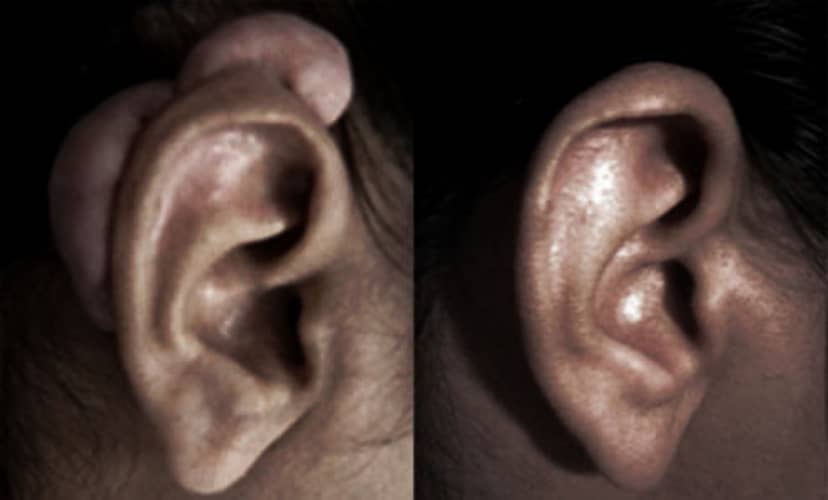
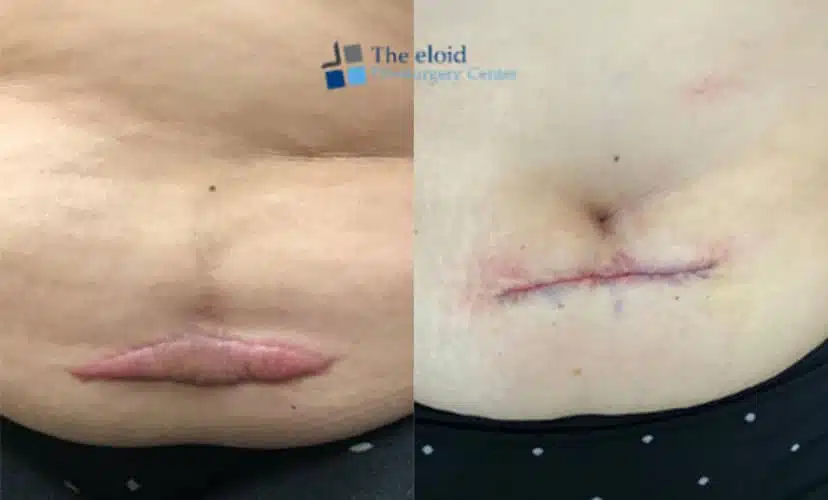
Before & After Keloid Excision/Surgical Removal
Natural & Unparalleled Results
Is Keloid Removal Covered by Insurance?
In some cases, keloid treatment may be covered by insurance, but coverage depends on the terms of your specific health plan and whether the treatment is considered medically necessary rather than cosmetic. Your insurer may request medical records documenting your symptoms, previous treatments, photographs of the keloid, and a physician’s treatment recommendation. Some plans may also require prior authorization before treatment is performed.
Before scheduling your procedure, contact your insurance company and the treatment provider to confirm coverage requirements, network restrictions, required documentation, prior authorization, deductibles, copayments, coinsurance, and any services that must be paid out of pocket.
Why Choosing an Experienced Keloid Treatment Specialist Matters
Choosing a skilled and experienced specialist is an important part of developing an individualized keloid treatment plan. A qualified plastic surgeon can evaluate the scar’s size, location, treatment history, and risk of recurrence before recommending surgery or nonsurgical care.
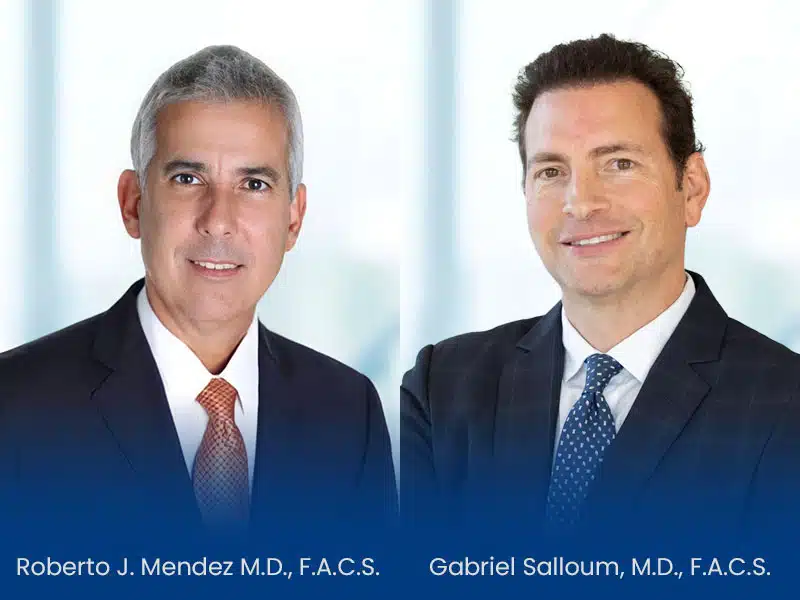
At The Keloid Plastic Surgery Center, board-certified plastic and reconstructive surgeons Dr. Roberto Mendez and Dr. Gabriel Salloum treat both new and recurrent keloids using individualized treatment plans that may include surgical excision, corticosteroid injections, cryotherapy, laser therapy, or Superficial Radiation Therapy. Call us at 833-453-5643 or visit our contact page to schedule your personalized consultation today.
Frequently Asked Questions About Keloid Removal Prices
Insurance coverage depends on the terms of your specific plan and whether the treatment is considered medically necessary rather than cosmetic. Symptoms such as pain, recurrent irritation, infection, bleeding, or restricted movement may help support medical necessity, but they do not guarantee approval. The insurer may require medical records, photographs, documentation of previous treatments, a physician’s recommendation, or prior authorization.
Keloid treatment may cost from a few hundred dollars to approximately $3,500 or more, depending on the treatment selected. Steroid injections, cryotherapy, and laser therapy are generally priced per session, while surgical excision is priced per procedure.
The number of sessions depends on the treatment method, the keloid’s size and location, its response to treatment, and whether it has returned after previous care. Steroid injections, cryotherapy, and laser therapy commonly require multiple sessions, while surgical excision is generally performed as one procedure followed by monitoring and, when recommended, additional recurrence-prevention treatment.
Yes. Larger or irregularly shaped keloids are more complex to treat and often require longer surgical times or more intensive therapy plans. Consequently, bulky or extensive keloids generally cost more to remove than small, flat ones.