
 1 (833) 453-5643
If you’ve had a keloid removed and you’re asking, Can I get my ears pierced after keloid removal? You’re not alone. It’s one of the most common questions patients bring to The Keloid Plastic Surgery Center. The answer isn’t a simple yes or no. Re-piercing after keloid removal is possible in some cases, but it comes with real risks that depend on your personal healing history, the location of the original scar, and how well the removal site has stabilized.
At The Keloid Plastic Surgery Center in Miami Beach and Aventura, FL, board-certified plastic surgeons Dr. Roberto J. Mendez and Dr. Gabriel Salloum specialize in keloid treatment. They’ve helped thousands of patients navigate this question with personalized guidance based on their individual scar history and skin type.

Is It Safe to Pierce Your Ears Again After Keloid Removal?
Before exploring the details, here are five key points to keep in mind:
- Re-piercing after keloid removal carries a significant risk of triggering new keloid scar tissue in the same earlobe or nearby areas.
- The earlobe must be fully healed, typically at least 12 months post-treatment, before re-piercing is even considered.
- Certain patients should not re-pierce at all, especially those with a history of aggressive or recurring keloids.
- Preventive treatments like steroid injections can lower recurrence chances if re-piercing is medically approved.
- Consulting a keloid specialist before making any piercing decision is the most important step you can take.
Why Keloids Form After Ear Piercing
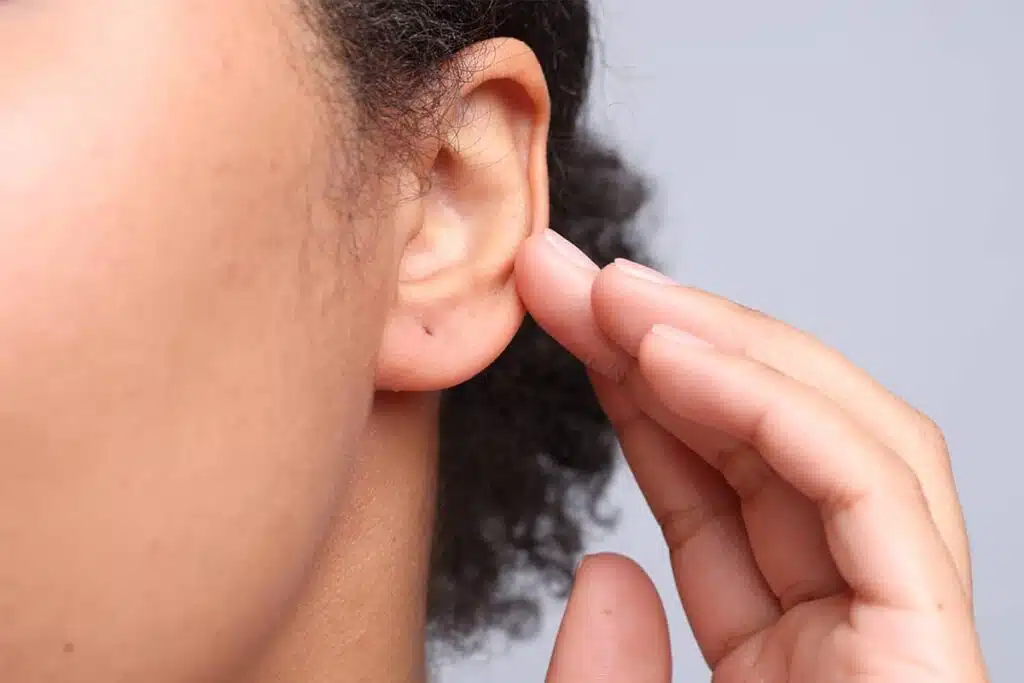
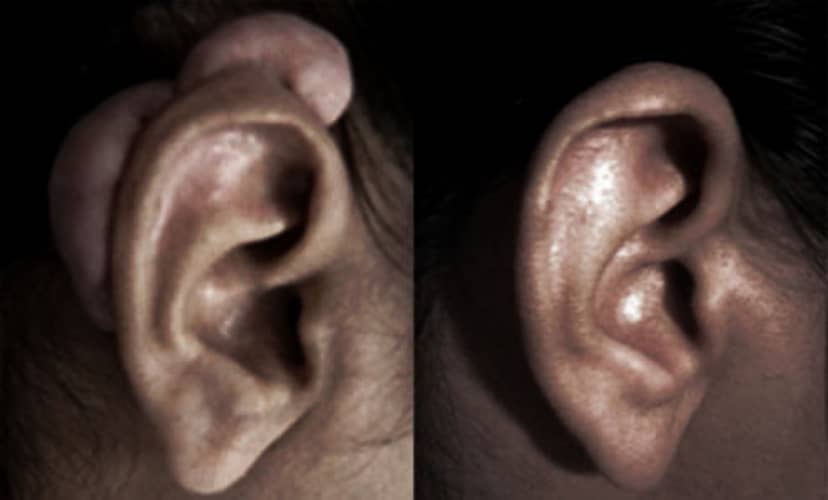
A keloid is not simply a large scar; it’s the result of an overactive wound healing response in which the body continues producing excess collagen long after the original wound has closed. Instead of forming flat, faded scar tissue, the skin builds up firm, raised tissue that expands beyond the original piercing site.
The earlobe is one of the most common body areas where keloids develop after piercing. Its soft tissue composition, combined with the ongoing pressure and friction that earrings can place on the skin, creates conditions that promote abnormal scar formation. In susceptible individuals, particularly those of African, Hispanic, or Asian descent, people under 30, and those with a family history of keloids, even a routine piercing can trigger this response.
What makes ear keloids especially tricky is that the scar may not appear immediately. It can take weeks or months after the initial trauma for a keloid to become visible, and it may continue to grow for years if left untreated. Any new wound, including a new piercing, can restart this same process.
Can You Re-Pierce Your Ears After Keloid Removal?
Keloid removal creates a new wound. During healing, the body goes through the same repair process that originally caused the problem, which is why surgery alone carries a high recurrence rate when not paired with additional treatment like steroid injections or superficial radiation therapy. After successful treatment, the removal site needs time to fully stabilize before any further skin trauma is introduced.
So can you re-pierce? In carefully selected cases, and only with a keloid specialist’s approval, re-piercing may be considered. But for many patients, the risk is simply too high. If your body formed a keloid once in response to an ear piercing, it can do so again. A new piercing introduces fresh trauma to tissue that has already shown a tendency toward abnormal scar formation, and the resulting keloid can sometimes be larger or more aggressive than the original.
The answer will depend on factors your surgeon must evaluate in person: the original keloid’s size and location, how well the removal site has healed, whether any recurrence has occurred, and your broader keloid history across other body areas.

Leading Experts in Keloid Plastic
Surgery in Miami Beach
When Is It Safe to Pierce Your Ears Again?
If your surgeon determines that re-piercing may be appropriate, timing is critical. Most keloid specialists recommend waiting a minimum of 12 months after treatment before considering a new piercing. By that point, the removal site should be fully healed, flat, and stable, with no signs of scar tissue regrowth.
Even then, re-piercing should only happen under medical guidance. Your surgeon may also recommend preventive treatment following the piercing, such as corticosteroid injections at the site, to reduce the body’s inflammatory response and lower the risk of a new keloid forming. Close follow-up in the months after re-piercing is equally important, since any early signs of thickened skin or pain can be addressed before a full keloid develops.
Signs You Should Not Re-Pierce Yet
Certain signs indicate that re-piercing is not advisable, at least not without further evaluation:
- The removal site feels raised, thickened, or itchy — possible early signs of recurrence.
- It has been less than a year since your keloid treatment.
- You have experienced keloid recurrence after prior removal attempts.
- You have keloids in multiple body areas, suggesting a strong systemic tendency toward abnormal healing.
- Your surgeon has not yet cleared the area as fully healed and stable.
If any of these apply, introducing a new piercing could undo the results of your treatment and lead to a scar that’s harder to address the second time around.
How to Reduce the Risk of Keloid Recurrence
For patients who receive medical approval to re-pierce, there are several important tips to follow.
- Choose the right timing. Never re-pierce before your surgeon confirms full healing. Rushing the process is one of the most common ways patients end up with a new keloid in the same earlobe.
- Avoid piercing through scar tissue. Placing a new piercing directly through or immediately adjacent to a healed removal site is particularly risky. Scar tissue responds differently than healthy skin, and the trauma of piercing through it can stimulate collagen overproduction.
- Consider preventive treatments. Discuss with your surgeon whether post-piercing corticosteroid injections are appropriate. These injections can help suppress the inflammatory response and reduce the body’s tendency to overproduce collagen at the new wound site.
- Use medical-grade piercing techniques. Needle-based piercing causes significantly less tissue trauma than piercing guns. For anyone with a keloid history, this distinction matters. Always choose a trained professional using sterile, single-use needles, and follow all aftercare instructions carefully.
BEFORE & AFTER GALLERY
Natural & Unparalleled Results
Why Seeing a Keloid Specialist Before Re-Piercing Matters
Keloid scars behave differently than ordinary scars, and their treatment requires a level of expertise that general dermatology or standard cosmetic care often can’t match. A keloid specialist understands the biological behavior of these scars — how collagen continues to accumulate, how healing patterns vary by skin type, and how to design a treatment plan that minimizes the risk of regrowth.
At The Keloid Plastic Surgery Center, Dr. Mendez and Dr. Salloum evaluate each patient’s full keloid history before offering any guidance on re-piercing. Their approach prioritizes long-term results over short-term answers. If re-piercing is appropriate for you, they’ll tell you when and how to do it safely. If it isn’t, they’ll walk you through alternatives, like pressure earrings or clip-on styles, that let you wear earrings without creating a new wound.

Both surgeons bring extensive experience treating keloids across all body areas and skin types, with a focus on realistic expectations, advanced treatment options, and preventing recurrence for the long term. Patients throughout South Florida and from around the world seek their care for complex and recurring keloid cases.
If you’ve had a keloid removed and are considering re-piercing, the most important step is a consultation. Schedule yours at The Keloid Plastic Surgery Center in Miami Beach or Aventura, FL to get a clear, personalized answer based on your unique situation.
FAQs About Ear Piercing After Keloid Removal
Yes. Because keloid removal creates a new wound, the body’s overactive healing response can be triggered again, potentially forming new scar tissue at the removal site. This is why treatment at The Keloid Plastic Surgery Center typically combines surgical excision with adjunct therapies, such as steroid injections and superficial radiation therapy, to significantly reduce the recurrence rate.
There is no zero-risk option for someone with a keloid history. However, for patients who have had a successful removal, fully healed, and have received clearance from a specialist, re-piercing under medical guidance, paired with preventive treatment and close follow-up, can reduce the chances of a new keloid forming. Alternatives like pressure earrings or clip-ons carry no piercing risk at all.
At a minimum, 12 months after keloid treatment, and only after your surgeon confirms the site is fully healed and stable. The timeline varies depending on the size of the original scar, the treatment approach used, and your individual healing pattern. Re-piercing before receiving medical clearance significantly increases your risk of recurrence.
Yes. Genetic predisposition plays a major role. Individuals of African, Hispanic, and Asian descent are at higher risk, as are people with a personal or family history of keloid formation and those under 30 years of age. For these patients, even minor skin trauma, including ear piercing, can trigger keloid development, making careful evaluation essential before any new piercing is considered.