
 1 (833) 453-5643
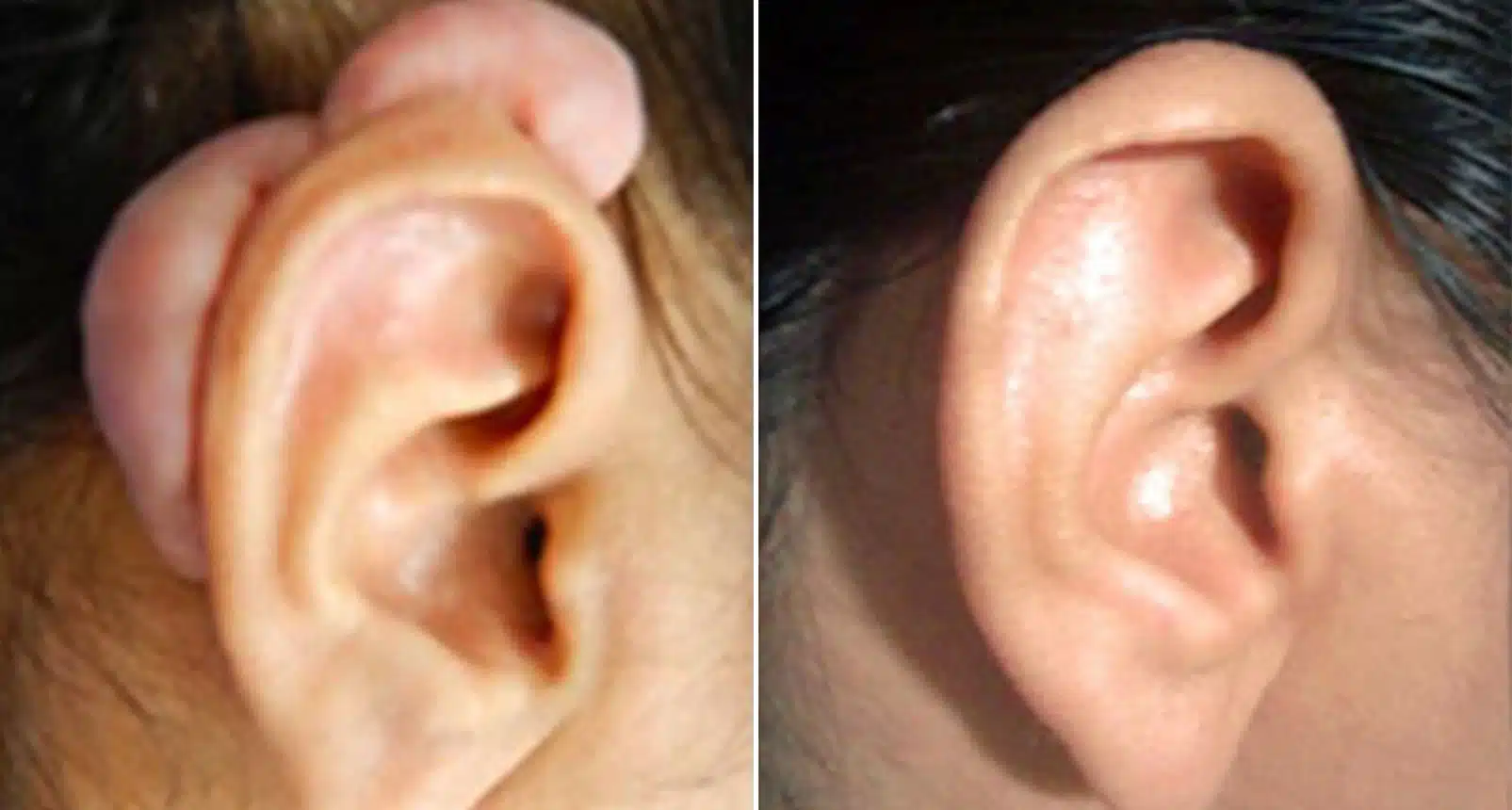
Have you noticed a raised, shiny bump forming around your ear piercing? You’re not alone. A keloid on ear piercing is a frustrating complication that can develop after even the most routine ear piercings, causing thickened scar tissue that may continue to grow beyond the original piercing site. These scars often appear weeks or months after the piercing and can become firm, itchy, uncomfortable, or cosmetically concerning over time.
Whether you’ve just noticed a small bump on your ear piercing or have been dealing with a persistent keloid for years, there are effective medical treatments available. In this guide, we’ll explain what causes ear piercing keloids, how common they are, how to reduce your risk, and the most effective ways to treat and remove keloids safely under specialist care.
How Common Are Keloids From Ear Piercings?
Keloids from ear piercings are not extremely common, but they are a known complication. According to a study published in the National Institutes of Health database, the incidence of keloids among individuals with ear piercings ranges from 2.5% to 6%. The likelihood increases significantly in individuals with darker skin tones (Fitzpatrick skin types IV–VI), as well as those with a family history of keloids. While rare for some, for others with these predispositions, the risk is quite real.
What Is a Keloid on Ear Piercing?
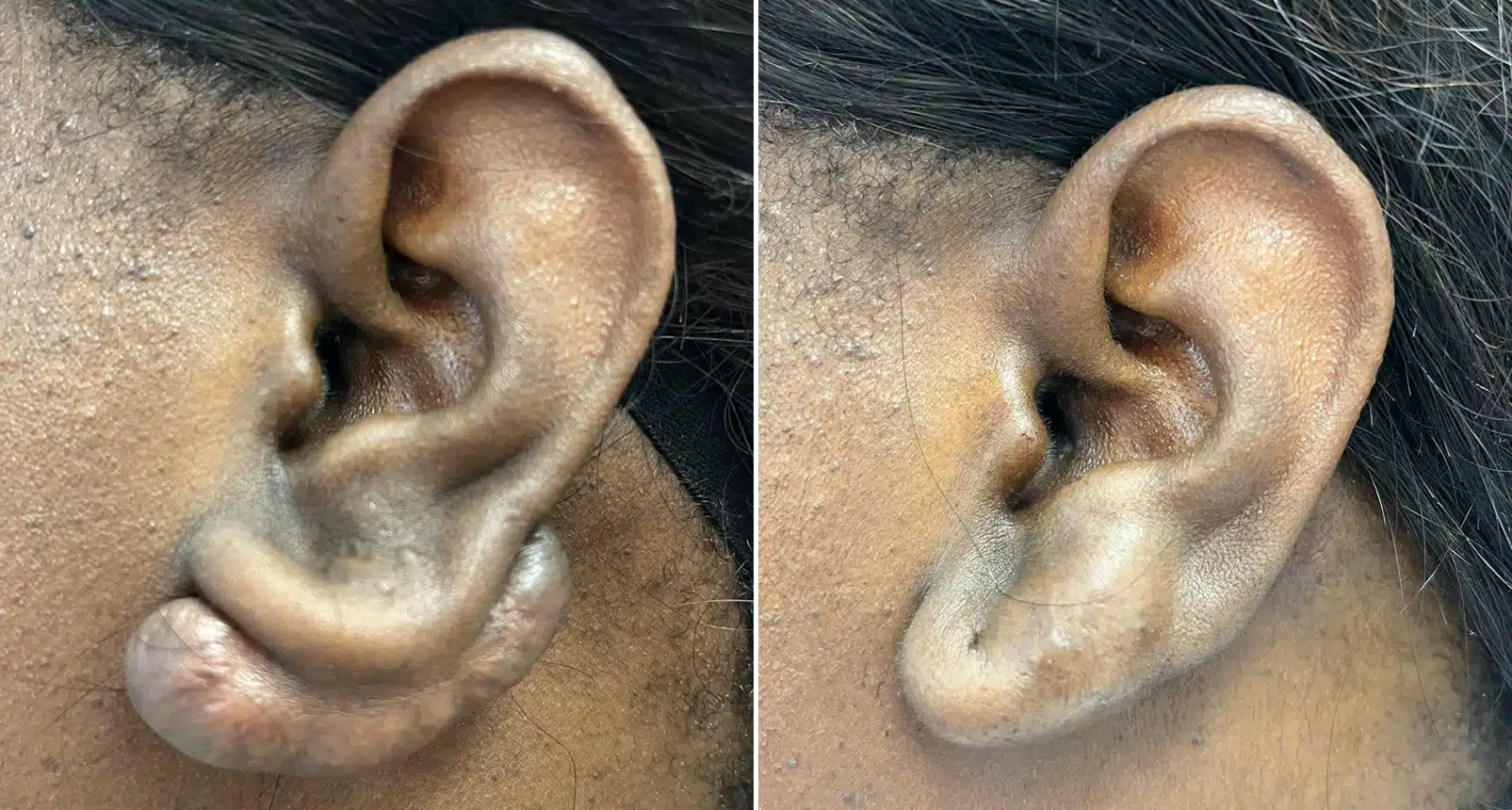
A keloid on an ear piercing is an abnormal overgrowth of scar tissue that develops when the skin heals too aggressively after a piercing. Instead of stopping once the wound closes, collagen production continues, causing the scar to thicken and expand beyond the original piercing hole.
What Causes Keloid Scars on Ear Piercings?
Keloids (hypertrophic scars) are caused by an overproduction of collagen, the protein responsible for repairing wounds. When the body produces too much collagen during the healing process, it can result in a raised, thickened scar that grows beyond the original injury site — also known as a keloid.
While anyone can develop keloids, several factors can increase your risk, especially when it comes to ear piercings:
- Genetics: A family history of keloids significantly raises your risk.
- Skin tone: People with darker skin tones are more likely to develop keloids.
- Infection: Any infection at the piercing site can worsen the scar response.
- Trauma or surgery: Tugging, snagging, frequent friction, or even insect bites at the piercing site.
- Improper aftercare: Not cleaning or over-cleaning the area can interfere with healing.
- Tattoos and piercing technique: Gun piercings, for example, can cause more trauma than needles.
Symptoms of Ear Keloids from Earrings or Piercings
Keloids don’t always appear immediately after a piercing, which can make them difficult to identify early on. They tend to develop slowly over weeks or months and can sometimes be mistaken for other types of bumps or scar tissue. Recognizing the symptoms early is crucial in seeking effective treatment and preventing the keloid from growing larger.
Here are the most common symptoms associated with ear keloids:
- Raised, firm growth: Keloids are often thick, smooth, and elevated above the surrounding skin.
- Shiny or rubbery texture: The surface of a keloid can appear glossy or feel rubber-like to the touch.
- Itching or irritation: Many individuals experience persistent itchiness around the keloid, especially as it grows.
- Discomfort or tenderness: Keloids can be sensitive to touch and may become painful, particularly if irritated by earrings or pressure.
- Skin discoloration: The color of a keloid may vary from pink or red to dark brown, depending on your skin tone and how long the keloid has been present.
- Gradual enlargement: Keloids tend to grow slowly over time, often expanding beyond the original boundary of the piercing site.

Leading Experts in Keloid Plastic
Surgery in Miami Beach
How to Get Rid of Keloid Scars From Ear Piercings
If you’re already dealing with a keloid from an ear piercing, don’t worry — there are several safe and effective treatment options available. The right approach depends on the size, age, and severity of the keloid, as well as your skin type and medical history. Some treatments aim to shrink the keloid, while others are focused on removing it entirely and preventing it from coming back.
Laser Therapy
Laser therapy is a non-invasive treatment option that uses focused light energy to reduce the appearance and thickness of keloids. This technique works by breaking down excess scar tissue and stimulating healthy skin regeneration. Pulsed dye lasers (PDL) are commonly used for keloids, especially in combination with other therapies like corticosteroid injections. While it may take multiple sessions, laser treatment can significantly flatten keloids, reduce discoloration, and improve skin texture without the need for cosmetic surgery. It’s a safe and effective choice, particularly for smaller or newer keloids on the ears.
Corticosteroid Injections
Steroid injections are one of the most common and effective treatments for reducing keloid size and symptoms. These anti-inflammatory medications are injected directly into the keloid to shrink the tissue, soften the scar, and relieve itching or discomfort. Treatments are usually given every few weeks over several treatments, depending on the keloid’s size and response. Corticosteroids may also be combined with other treatments, like laser or surgery, for better results. This option is especially helpful in flattening keloids and preventing them from growing further, making it ideal for early to moderately developed ear keloids.
Cryotherapy
Cryotherapy involves freezing the keloid tissue with liquid nitrogen to destroy excess scar cells and reduce the size of the keloid. This method works by causing controlled damage to the abnormal scar tissue formations, prompting it to shrink over time. It’s most effective on smaller keloids and is often used in combination with corticosteroid injections for enhanced results. While it may cause temporary swelling or blistering, cryotherapy is a relatively quick, in-office procedure with minimal downtime. It’s a good option for patients looking for non-surgical ways to manage early or small ear keloids.
Ear Keloid Removal Surgery
Surgical removal is often recommended for larger keloids or more persistent ear keloids that haven’t responded well to non-invasive options. During the procedure, a specialist carefully excises the keloid tissue, often using advanced techniques to minimize trauma and reduce the chance of recurrence. However, the surgical procedure alone is not usually enough — it’s typically followed by adjunct treatments such as corticosteroid injections or superficial radiation therapy to prevent regrowth. When performed by a skilled plastic surgeon, keloid removal surgery can restore the ear’s appearance and significantly improve comfort and quality of life.
Superficial Radiation Therapy
Radiotherapy (SRT) is a highly effective technique used to prevent keloid recurrence after surgical removal. This targeted, low-dose radiation is applied directly to the skin’s surface to destroy any remaining keloid-forming cells. SRT is typically administered within 24–72 hours after surgery and has been shown to significantly reduce the likelihood of regrowth. It’s a painless, outpatient procedure with minimal side effects. At specialized centers like ours, SRT is often a key part of comprehensive keloid treatment plans, especially for patients who have experienced multiple recurrences or have large, complex ear keloids.
Other Non-surgical Treatments
For patients looking for additional non-surgical options, therapies like silicone gel sheets and pressure therapy may be recommended by a dermatologist. Silicone gel sheets are applied directly over earlobe keloids, helping to hydrate the scar tissue and reduce collagen buildup, which gradually softens and flattens the keloid. Pressure earrings or compression devices work by applying gentle, consistent pressure to the area, which can limit blood flow and discourage keloid growth. These methods are especially useful for small keloids and are often combined with other treatments for improved results. While they typically require consistent, long-term use, they remain effective tools without the need for surgical excision.
Does Keloid Risk Depend on Where the Ear Is Pierced?
Yes. The risk of developing a keloid after an ear piercing can vary depending on the location of the piercing and the amount of trauma to the tissue.
Earlobe Piercings
- Lower risk compared to cartilage areas.
- A keloid on a lobe piercing may still occur, especially in individuals prone to keloids.
- Often related to irritation or pressure from earrings.
Cartilage Piercings
- Higher risk due to limited blood supply.
- A keloid on cartilage piercing is more likely to grow and become firm.
- Cartilage piercing keloids may be more difficult to treat.
Back of the Ear
- Commonly affected by friction and pressure.
- A keloid on the back of an ear piercing may go unnoticed early.
- Often associated with tight earrings or prolonged irritation.
How to Prevent Keloids on Ear Piercings
While keloids cannot always be prevented, especially in genetically predisposed people, certain steps can significantly reduce the risk. Studies suggest that keloids from ear piercings occur in approximately 2.5% to 6% of individuals, with higher rates in those with darker skin tones or a family history of keloids.
Here are some effective prevention techniques:
- Choose an experienced professional: Needle piercings generally cause less trauma than piercing guns.
- Avoid cartilage piercings if you are prone to keloids: Earlobe piercings carry a lower risk than cartilage areas.
- Follow proper aftercare instructions: Clean gently with saline and avoid harsh or alcohol-based products.
- Minimize pressure and friction: Avoid sleeping on the piercing and limit frequent touching or twisting.
- Watch for early changes: Persistent redness, thickening, or a growing bump should be evaluated early by a specialist.
Early medical evaluation is especially important for individuals with known risk factors, as prompt treatment may help limit keloid growth.
BEFORE & AFTER GALLERY
Natural & Unparalleled Results
Choosing The Best Keloid Treatment For You
When it comes to treating keloids, especially on delicate areas like the ears, choosing an experienced specialist makes all the difference. An expert understands how to assess the size, location, and history of the keloid to recommend the most effective combination of treatments — minimizing recurrence and improving cosmetic results.
At The Keloid Plastic Surgery Center, your care is in the hands of two board-certified Plastic and Reconstructive Surgeons with a deep focus on keloid treatment. Dr. Roberto Mendez and Dr. Gabriel Salloum have successfully treated patients from across the globe, handling everything from minor keloids to the most complex cases. Plus, we’re one of the few U.S. clinics offering advanced SRT (Superficial Radiation Therapy) with proven lower recurrence rates.
Ready to take the first step? Call us at 833-453-5643 or visit our contact page to schedule a consultation.
FAQs About Ear Piercing Keloids
Keloids from ear piercings are relatively uncommon, affecting an estimated 2.5% to 6% of individuals. The risk is higher in people with darker skin tones and those with a family history of keloids.
No. True keloids typically do not go away without treatment. Unlike minor piercing bumps, keloids continue to grow due to excess collagen production and often require medical intervention.
A keloid can develop weeks or even months after an ear piercing. This delayed appearance is one reason keloids are sometimes mistaken for other types of scar tissue.
Not every bump that forms after an ear piercing is a keloid. Early on, irritation bumps or hypertrophic scars can look similar, which is why many people search for whether a piercing bump or keloid is forming. The key difference is how the scar behaves over time.
Ear keloid removal may involve treatments such as corticosteroid injections, laser therapy, surgical excision, or a combination of approaches. In some cases, superficial radiation therapy is used after surgery to reduce recurrence.