
 1 (833) 453-5643
Keloid scars can continue growing long after a wound has healed, becoming raised, uncomfortable, and difficult to ignore. Many people wonder how to flatten and reduce a keloid scar safely, especially when it affects visible areas of the skin. Understanding why keloids form and how they respond to treatment is the first step toward improving their appearance.
Fortunately, several non-surgical approaches can help reduce scar thickness, improve skin texture, and prevent further growth. In this guide, Dr. Mendez and Dr. Salloum share their expertise on keloid formation and the most effective keloid treatment options available to help you manage these scars with confidence.
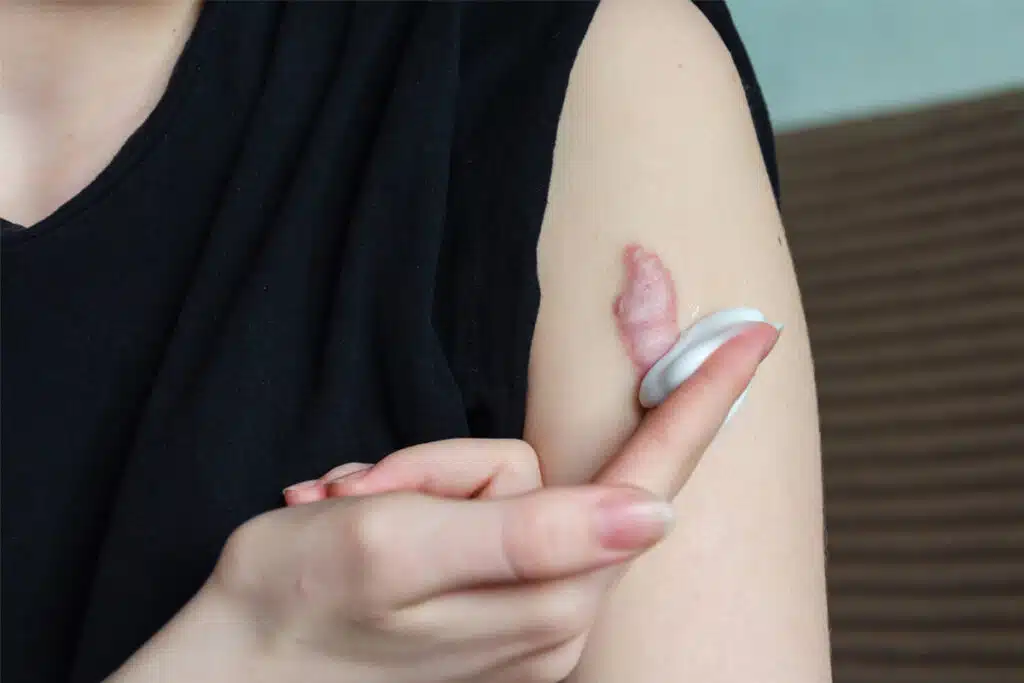
Understanding and Treating Keloid Scars
- Keloid scars form when the body produces excess collagen, causing the scar to grow beyond the original wound.
- Unlike normal scars, keloids do not shrink on their own and may continue growing without treatment.
- Early treatment can help reduce scar thickness and improve overall skin appearance.
- Both at-home care and medical treatments can help manage keloids and prevent worsening.
- Genetics, skin type, and skin injuries all influence the risk of developing keloid scars.
Types of Keloid Scars
Keloids can take various forms, including linear, nodular, and widespread. Recognizing the type of scar you have helps determine the most effective treatment. Linear keloids typically form along a wound’s incision line, while nodular keloids are characterized by raised nodules on the skin’s surface.
Keloid vs. Hypertrophic Scars
Keloids and hypertrophic scars are often confused, but they differ in their appearance and treatment. While hypertrophic scars are raised and red, keloids are thicker and extend further. Recognizing this distinction is crucial when determining the most suitable treatment for your scar type.
Causes of Keloid Formation
Various types of skin injuries can cause the overgrowth of scar tissue that leads to the formation of keloids. These include:
- Surgical scars
- Insect bites
- Chickenpox
- Injection sites
- Acne scarring
- Body piercings
- Ear piercings
Certain patients are more prone to developing keloids when they undergo scarring. For example, individuals with darker skin tones, such as African Americans, Latinos, and Asians, have a higher likelihood of developing keloids, with a 15% to 20% increased risk. Exploring these causes and your skin type can help in preventing their development. Because many common skin injuries—such as chickenpox, acne, and ear piercings—occur early in life, parents often seek specialized advice on treating keloids in toddlers and teenagers.
The Role of Family History
If keloids run in your family, you may be genetically predisposed to developing them. Understanding your family history can help you take proactive measures. Consider genetic counseling to assess your risk and discuss preventive strategies with a healthcare professional.
How to Flatten and Reduce Keloid Scars Without Surgery
Keloid scars can often be improved without surgery using a combination of at-home care and medical treatments. Early and consistent treatment can help reduce scar thickness, improve skin texture, and prevent further growth. The right approach depends on the scar’s size, location, and how early treatment begins.
At-Home Treatments That Help Improve Keloid Appearance
Several non-invasive treatments can be used at home to help flatten and manage keloid scars and support the skin’s healing process. These treatments work best when used consistently and during the early stages of scar formation.
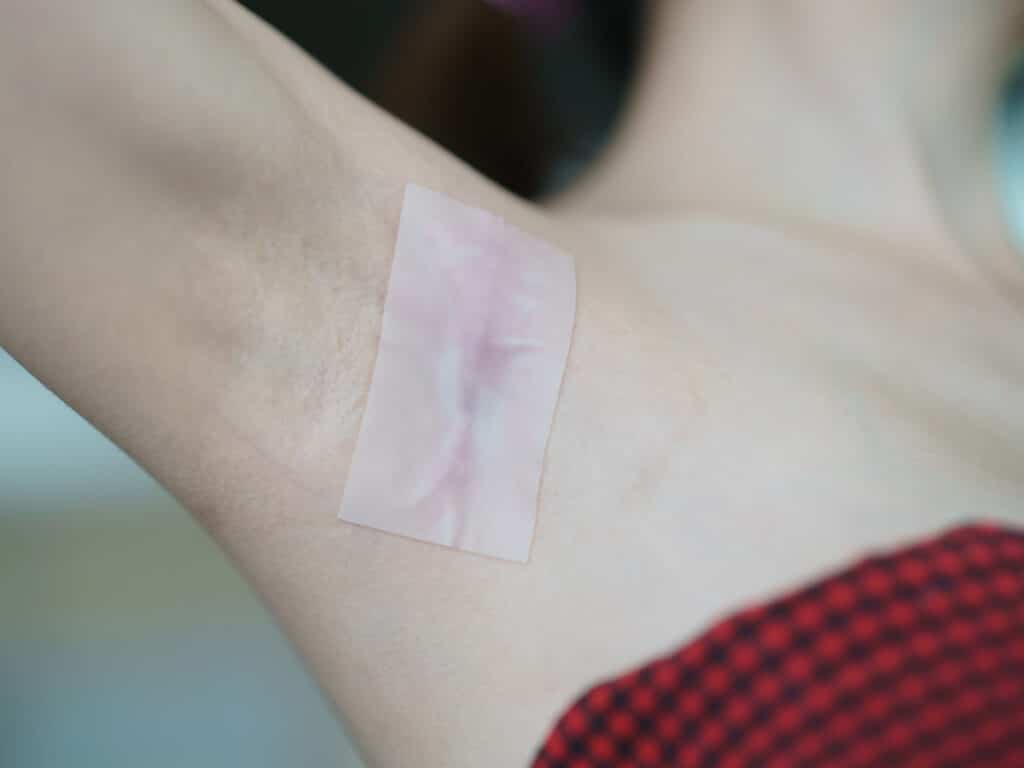
Silicone Gels and Sheets for Managing Keloid Scars
Silicone gels are a popular choice for scar management. Learn how to apply them effectively to your keloid scars, promoting optimal healing and reduced scarring.
Silicone sheets work by creating a protective barrier over the scar, which helps retain moisture and flatten the scar tissue. To maximize their effectiveness, it’s crucial to apply them consistently.
Silicone therapy is most effective when used consistently over several weeks or months, especially during early scar formation.
Topical Treatments and Creams for Keloid Care
Counter creams and ointments can alleviate itching and discomfort caused by keloids. Although they are not a cure, they can be a beneficial addition to proper wound care. Consider seeking products with ingredients such as aloe vera or vitamin E for their soothing properties.
When selecting a cream or ointment, it is essential to take into account your skin type and any potential allergies. It is advised to seek guidance from a professional to ensure that the cream is suitable and safe for your specific skin condition.
Lifestyle and Skin Care Practices That Support Keloid Healing
Gentle scar massage may help improve circulation and soften scar tissue over time. This can support the healing process and improve skin flexibility. However, massage should only be performed if recommended by a healthcare professional, as improper technique may worsen irritation.
Making specific lifestyle choices, such as minimizing sun exposure and maintaining a balanced diet, can aid in diminishing the visibility of keloids. Practicing measures to shield your skin from UV rays and ensuring proper nutrition can support your body’s innate healing mechanisms.

Leading Experts in Keloid Plastic
Surgery in Miami Beach
Medical Treatments That Help Reduce Keloid Size
When at-home treatments are not sufficient, medical procedures can help reduce excess scar tissue and improve the appearance of keloids. These treatments work by reducing inflammation and controlling collagen production.
Steroid Injections to Reduce Excess Scar Tissue
Steroid injections are effective in flattening severe scarring. Keloid intralesional steroid therapy works by reducing inflammation and preventing excessive scar tissue growth by inhibiting collagen production. Your doctor will administer these injections directly into the keloid to minimize discomfort and promote scar improvement.
Cryotherapy: Freezing Away Scars
Cryotherapy is another effective method for the reduction or removal of keloids. It involves freezing the keloid scar with liquid nitrogen. This process causes the scar tissue to break down and gradually flatten. It is a minimally invasive procedure that can yield promising results, especially for smaller keloids.
Compression Therapy for Controlling Keloid Growth
Compression therapy or keloid pressure treatment involves using pressure garments to flatten scars. By applying constant pressure to the keloid scar, compression therapy helps break down excess collagen and promotes better blood flow to the area. This improved circulation can enhance the scar’s healing process, leading to a smoother appearance over time.
Superficial Radiation Therapy
When it comes to minimizing the appearance of scar tissue, targeted keloid radiation is an effective option. This procedure uses beams of low-energy X-rays that are directed at the area of scarring. The radiation works by targeting the healthy tissue surrounding the scar, promoting better healing and reducing the size and discoloration of the keloid.
Summary of Non-Surgical Keloid Treatment Options
| Treatment | How it helps | Best for |
|---|---|---|
| Silicone sheets and gels | Hydrate scar tissue and help soften and reduce thickness over time | New or small keloids |
| Steroid injections | Reduce inflammation and slow excess collagen production | Thick or growing keloids |
| Compression therapy | Applies pressure to help control scar growth and improve appearance | Ear and post-surgical keloids |
| Cryotherapy | Freezes scar tissue to reduce size and firmness | Smaller, localized keloids |
| Radiation therapy | Helps prevent regrowth and improves scar texture | Persistent or recurrent keloids |
A specialist can help determine which treatment or combination of treatments is most appropriate based on the scar’s characteristics.
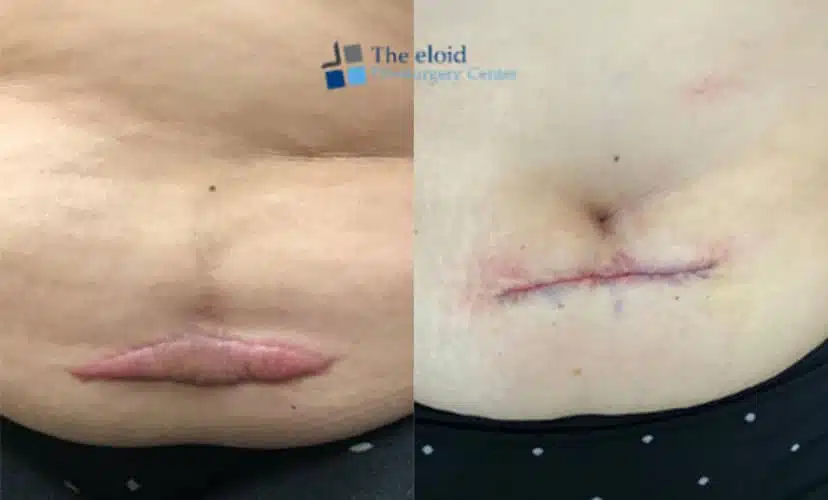
BEFORE & AFTER GALLERY
Natural & Unparalleled Results
How to Prevent Keloids From Growing or Worsening
Early intervention is one of the most effective ways to prevent keloids from becoming larger or more noticeable. Treating scars early, protecting the skin, and following professional recommendations can help control scar development and improve long-term outcomes.
The Importance of Early Treatment
Addressing keloid scars early is essential to prevent excessive scarring. Timely intervention can reduce their appearance and minimize the need for surgical removal. Consult a dermatologist as soon as you notice keloid formation to explore treatment options.
When to Consider Keloid Surgical Removal
In some cases, keloid surgery may be necessary, especially if non-surgical methods prove ineffective. Consult with a specialist to explore this option. Surgical scar removal involves excising the keloid tissue, but it may increase the rate of recurrence. You can avoid this by combining the surgery with a non-invasive treatment. Your doctor will guide whether this step is suitable for your situation.
Schedule an Appointment with Our Specialists
If you’re struggling with keloids, our specialists, Dr. Mendez and Dr. Salloum, are here to help. They have extensive experience in keloid management and can provide personalized guidance based on your unique situation. Do not wait any longer; take the first step towards smoother, scar-free skin by scheduling an appointment with our experts today.
Remember, keloid scars can be managed effectively without surgery. Explore your options, consult with specialists, and take control of your skin’s appearance.
Now that you have learned how to reduce the appearance of keloid scars without surgery, you can start working towards achieving smoother and scar-free skin. By implementing non-surgical techniques and consulting with professionals as needed, individuals can reduce the visibility of keloids and improve their self-assurance. Take control of your skin’s appearance by not allowing keloids to hinder you.
Frequently Asked Questions About Keloid Scars
No, keloid scars do not go away without treatment. They may remain the same size or grow over time. However, other treatments such as silicone therapy, steroid injections, and compression can help reduce their size and improve their appearance.
Keloids grow due to excess collagen production during the healing process. Skin injuries such as cuts, acne, piercings, or surgery can trigger this response. Genetics and delayed treatment can also increase the likelihood of continued growth.
Keloids are not dangerous or cancerous, but they can cause discomfort, itching, or pain. Some people also experience emotional distress due to their appearance. Treatment can help manage symptoms and improve skin comfort.
You should consult a specialist if the scar continues growing, becomes painful, or affects your quality of life. Early treatment can help improve outcomes and prevent the scar from becoming more severe.
While not all keloids can be prevented, early care can reduce the risk. Keeping wounds clean, avoiding unnecessary skin trauma, and using preventive treatments like silicone sheets may help reduce excessive scarring.
A tummy tuck is a cosmetic surgery done by other providers, not a keloid treatment. If you plan to have one elsewhere, Dr. Mendez or Dr. Salloum can advise on your keloid care and ways to help reduce the risk of regrowth after that procedure.