
 1 (833) 453-5643
While topical products cannot completely remove an established keloid, certain creams, silicone gels, and silicone sheets may help soften raised scar tissue, reduce redness or discoloration, relieve itching, and improve the scar’s overall appearance with consistent use.
Board-certified plastic surgeon Dr. Roberto J. Mendez has reviewed several over-the-counter creams, gels, and silicone treatments commonly used to manage keloid scars. Below, we explain which products may be most helpful, what each option is best suited for, and what results you can realistically expect. For larger, painful, growing, or recurring keloids, topical products may work best as part of a broader treatment plan recommended by a qualified medical professional.
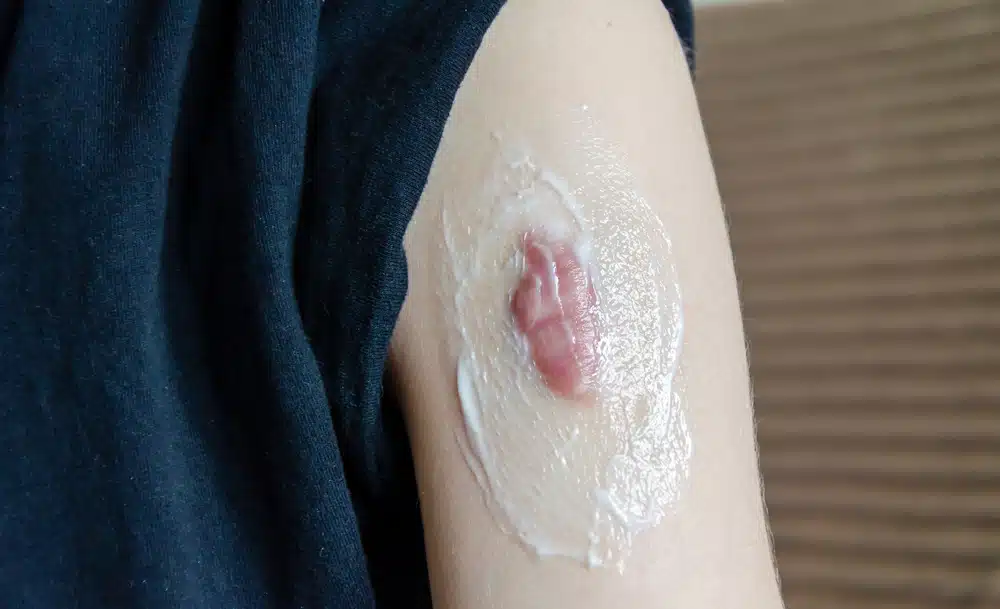
How to Choose the Right Keloid Scar Removal Cream for You
- Certain topical products may help soften keloids, reduce discomfort, or improve their appearance, but they generally cannot remove an established keloid.
- The effectiveness of topical scar products varies. Silicone gels and sheets may help soften and gradually flatten some raised scars.
- Consistent application is important, and some topical scar treatments must be used daily for several months before visible improvement occurs.
- Look for a scar-management product with clearly identified ingredients, appropriate usage instructions, and credible clinical evidence supporting its intended use.
- Consider your skin type, sensitivities, allergies, and the location of the scar when choosing a topical treatment.
Topical Products for Improving the Appearance of Keloid Scars
Many people begin with non-invasive scar-care products. These products may help improve hydration, comfort, color, or texture, but they cannot reliably remove an established keloid. Professional care is often needed for scars that are painful, growing, recurring, or extending beyond the original wound.
How We Selected These Products
We selected these products based on their active ingredients, intended use, manufacturer instructions, listed precautions, ease of application, available published evidence, and relevance to raised scars such as keloids and hypertrophic scars. Silicone products were prioritized because they are commonly used in non-invasive scar management, although results vary and evidence for established keloids remains limited. Dr. Mendez reviewed each selection. No topical product can guarantee complete keloid removal, and larger, painful, growing, or recurring keloids may require professional treatment.
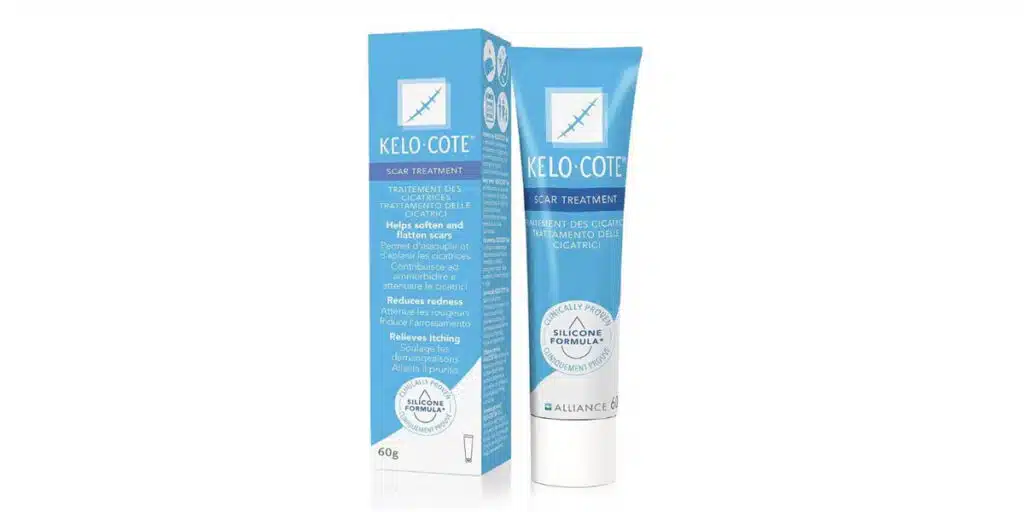
1. Kelo-Cote Advanced Formula Scar Gel
- Best for: Managing raised scars with a transparent, quick-drying silicone gel.
- Key ingredient: Silicone.
- Application method: Topical silicone gel.
Why We Picked It:
According to the Kelo-Cote product information, this gel is a transparent, self-drying silicone product intended to improve the appearance of scars. Silicone gel is commonly used as a non-invasive option for raised scars, including hypertrophic scars and keloids, and may help soften or gradually flatten scar tissue when applied consistently.
The gel format can be convenient for the face, joints, and other areas where silicone sheets may be difficult to keep in place. It should only be applied after the wound has fully closed and according to the product instructions. Results vary, and large, painful, growing, or recurring keloids may require professional treatment.
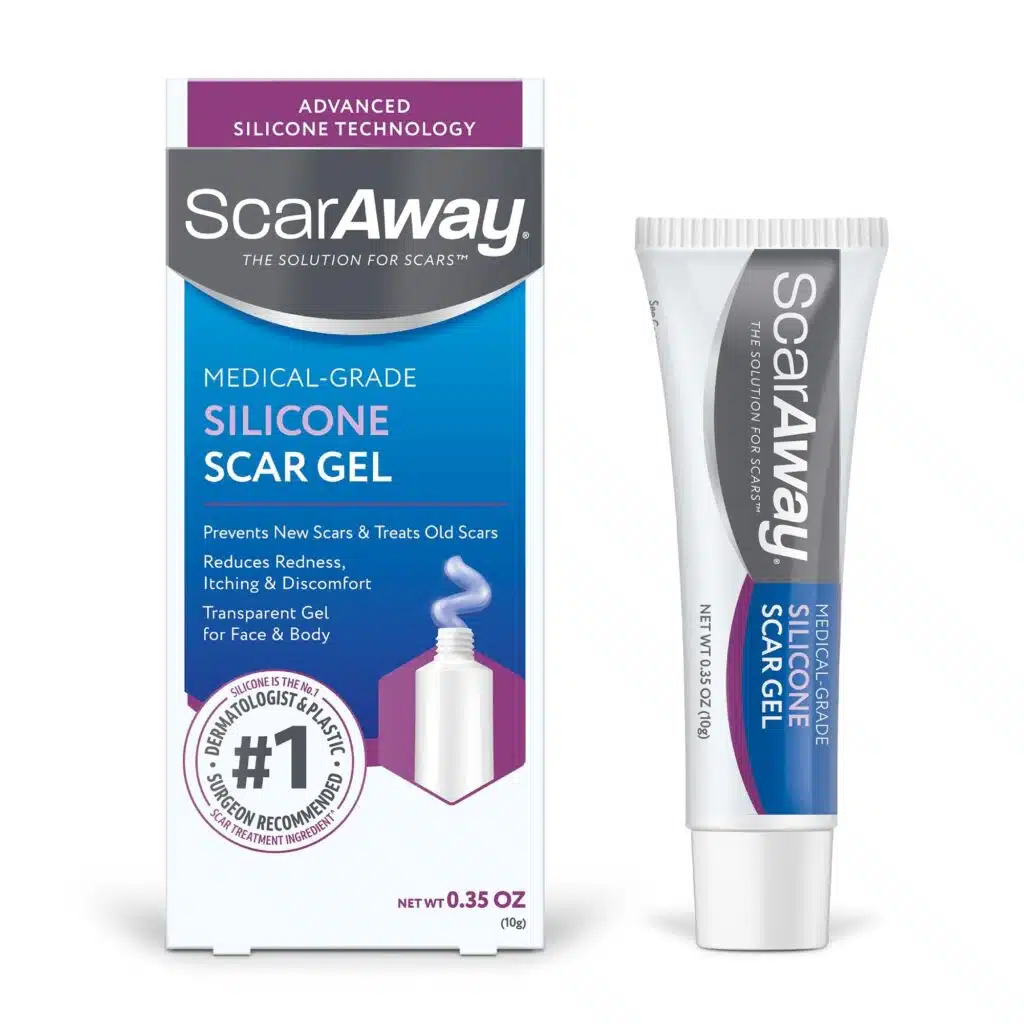
2. ScarAway Silicone Scar Gel
- Best for: Raised scars on the face or areas that are difficult to cover with silicone sheets.
- Key ingredient: Medical-grade silicone.
- Application method: Topical silicone gel.
Why We Picked It:
According to the ScarAway Silicone Scar Gel information, the product is a transparent, self-drying silicone treatment intended for new and older scars, including hypertrophic and keloid scars. It forms a flexible barrier over intact skin that helps maintain hydration and may gradually improve the softness, color, texture, or overall appearance of raised scar tissue.
Because the gel dries transparently, it may be easier to use on visible or curved areas of the body. It should not be applied to open, irritated, oozing, or crusted skin. Consistent use is important, but individual results vary and established keloids may require additional medical treatment.
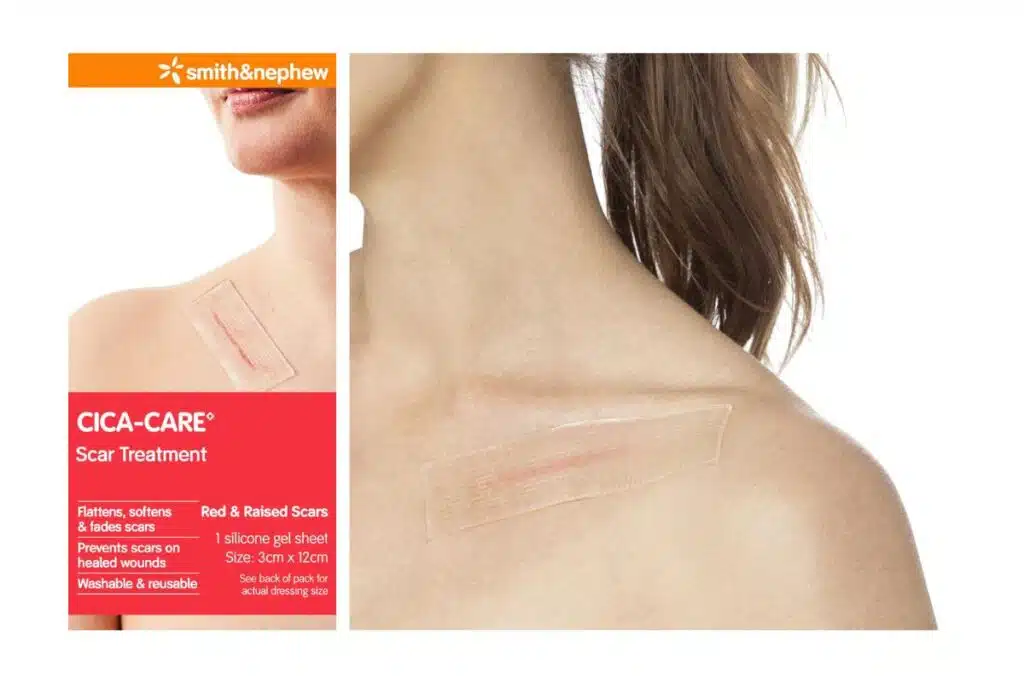
3. CICA-CARE Silicone Gel Sheet
- Best for: Raised keloid and hypertrophic scars that benefit from longer silicone contact.
- Key ingredient: Medical-grade silicone.
- Application method: Self-adhesive silicone sheet.
Why We Picked It:
According to Smith+Nephew’s CICA-CARE product guidance, CICA-CARE is a self-adhesive silicone gel sheet intended for the management of hypertrophic and keloid scars. The sheet provides prolonged contact with the scar and creates a semi-occlusive environment that helps maintain hydration. With consistent use, it may help soften or flatten some raised scars and improve their color or comfort.
The sheet can be trimmed to fit the treatment area and may be washed and reused by the same person according to the manufacturer’s instructions. It is intended for raised scars and should not be presented as a treatment for depressed, ice-pick, or other atrophic scars. Results vary, particularly with older or more established keloids.
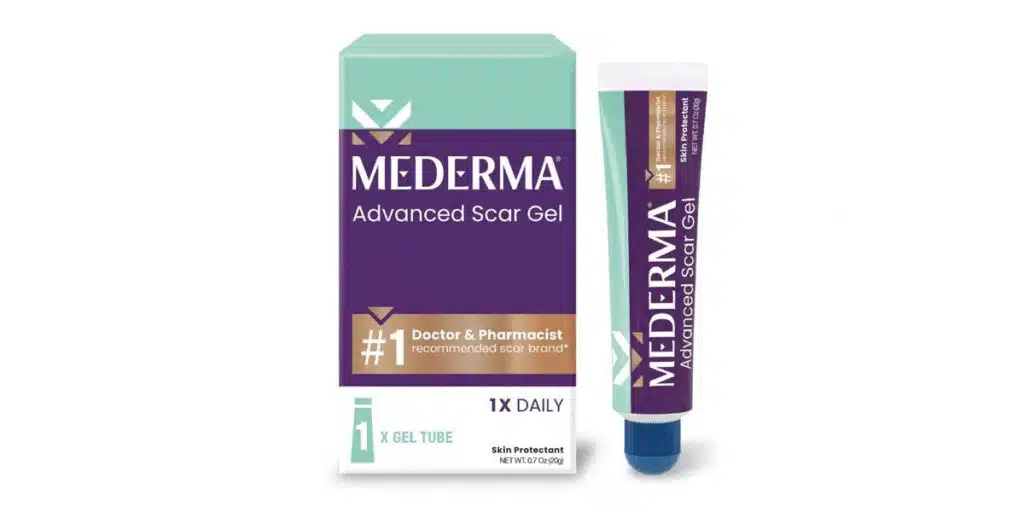
4. Mederma Advanced Scar Gel
- Best for: Cosmetic improvement of scars for people who prefer a once-daily gel.
- Key ingredients: Allantoin and onion bulb extract.
- Application method: Topical gel.
Why We Picked It:
Mederma Advanced Scar Gel contains allantoin, onion bulb extract, panthenol, and sodium hyaluronate. It is intended to improve the cosmetic appearance of scars after the wound has fully closed. Its once-daily application may make it a convenient option for people seeking general scar care.
However, research on onion-extract scar gels is mixed, and a systematic review of onion-extract scar gels found that they did not consistently perform better than other commonly used topical scar treatments. Mederma should therefore be presented as a lower-evidence cosmetic option rather than a proven treatment for established keloids. It does not replace professional care for a scar that is painful, growing, recurring, or extending beyond the original wound.
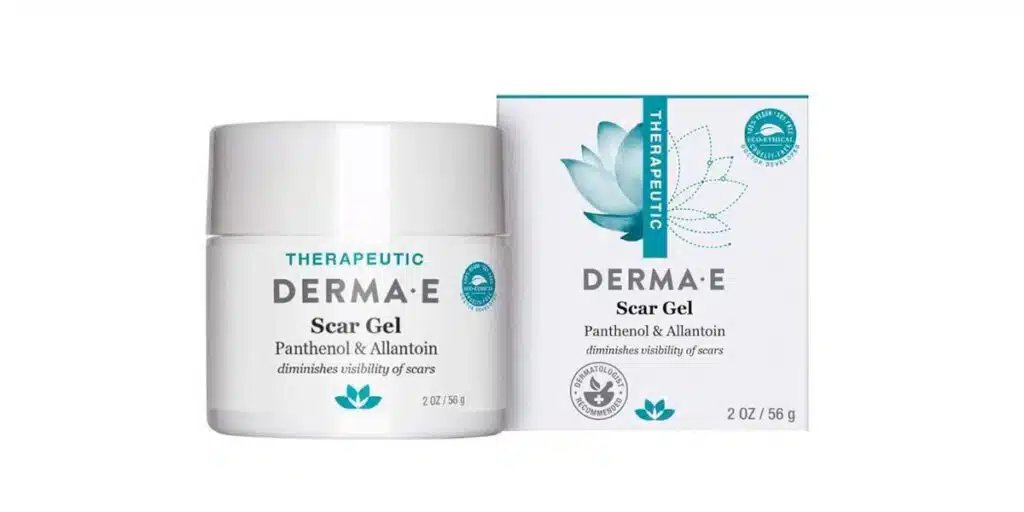
5. Derma E Scar Gel
- Best for: Supporting hydration and the cosmetic appearance of mild or flat scars; not a primary treatment for established keloids.
- Key ingredients: Panthenol, allantoin, and onion bulb extract.
- Application method: Topical gel.
Why We Picked It:
According to the current Derma E Scar Gel formula, the product contains skin-conditioning ingredients such as panthenol, glycerin, onion bulb extract, and allantoin. It is marketed to improve the texture, color, and general appearance of scars.
These ingredients may help hydrate the scar surface and improve comfort, but there is limited evidence that this product can flatten or control an established keloid. It is better described as a supportive cosmetic scar-care product than as a primary keloid treatment. People with sensitive skin should review the complete ingredient list and discontinue use if irritation develops.
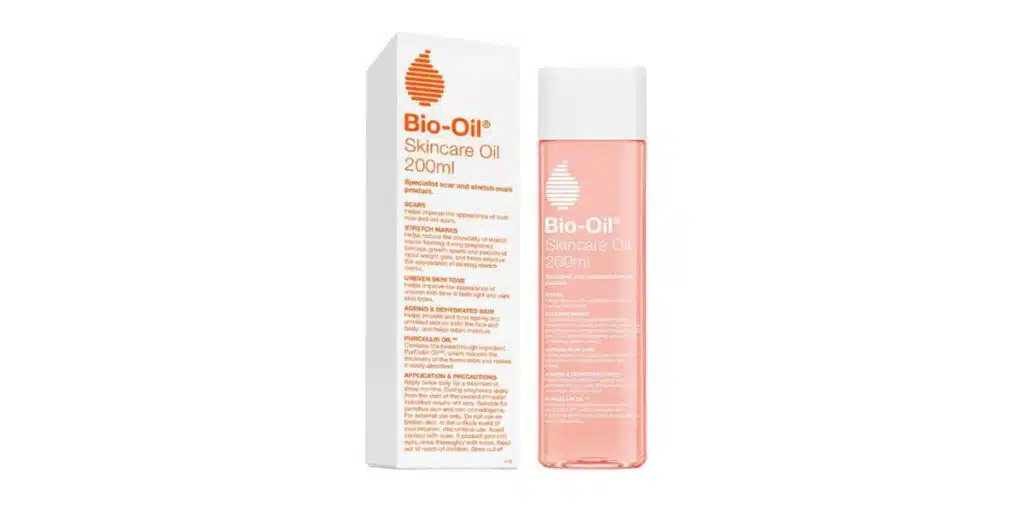
6. Bio-Oil Skincare Oil
- Best for: Moisturizing dry or tight scarred skin and supporting a smoother surface appearance.
- Key ingredients: Emollient oils and vitamins.
- Application method: Topical skincare oil.
Why We Picked It:
The official Bio-Oil product information describes it as a cosmetic skincare oil intended to improve skin hydration and the general appearance of scars and uneven skin tone. Its oil-based formula may help dry or tight scarred skin feel softer and more comfortable with regular use.
However, the evidence associated with Bio-Oil is not specific to established keloids. It should not be described as a product that can flatten a keloid, control scar growth, stimulate clinically beneficial collagen repair, or replace medical treatment. Bio-Oil is also not a sunscreen and should be used separately from a properly labeled broad-spectrum sun-protection product.

Leading Experts in Keloid Plastic
Surgery in Miami Beach

Ingredients Commonly Used in Keloid Scar Products
- Silicone is among the most commonly recommended topical options for raised scars. The American Academy of Dermatology’s guidance on treating keloid scars notes that silicone gel sheets may help flatten a keloid and may be used after the wound has healed. Silicone gels and sheets may help maintain hydration, soften raised tissue, reduce discomfort, or gradually improve a scar’s appearance.
- Onion extract is included in products such as Mederma and Derma E, but research on its effectiveness is mixed. It should be presented as a cosmetic scar-care ingredient rather than a proven treatment for established keloids.
- Moisturizing and skin-conditioning ingredients, including glycerin, panthenol, and allantoin, may help reduce dryness, tightness, or discomfort and improve the scar’s surface texture. However, these ingredients cannot remove an established keloid.
Choosing the Right Type of Keloid Treatment
When considering an at-home product for a keloid scar, it is important to understand the limitations of topical treatment. Board-certified plastic surgeon Dr. Roberto J. Mendez has more than two decades of experience treating complex and recurring keloids. He can evaluate the size, location, symptoms, and treatment history of a scar to determine whether topical care or an in-office treatment may be appropriate.
To discuss which approach may be appropriate for your scar, consider scheduling a consultation with Dr. Mendez. His experience can help determine whether a topical product is appropriate or whether treatments such as injections, laser therapy, keloid removal surgery, radiation therapy, or a combination approach should be considered.