1 (833) 453-5643
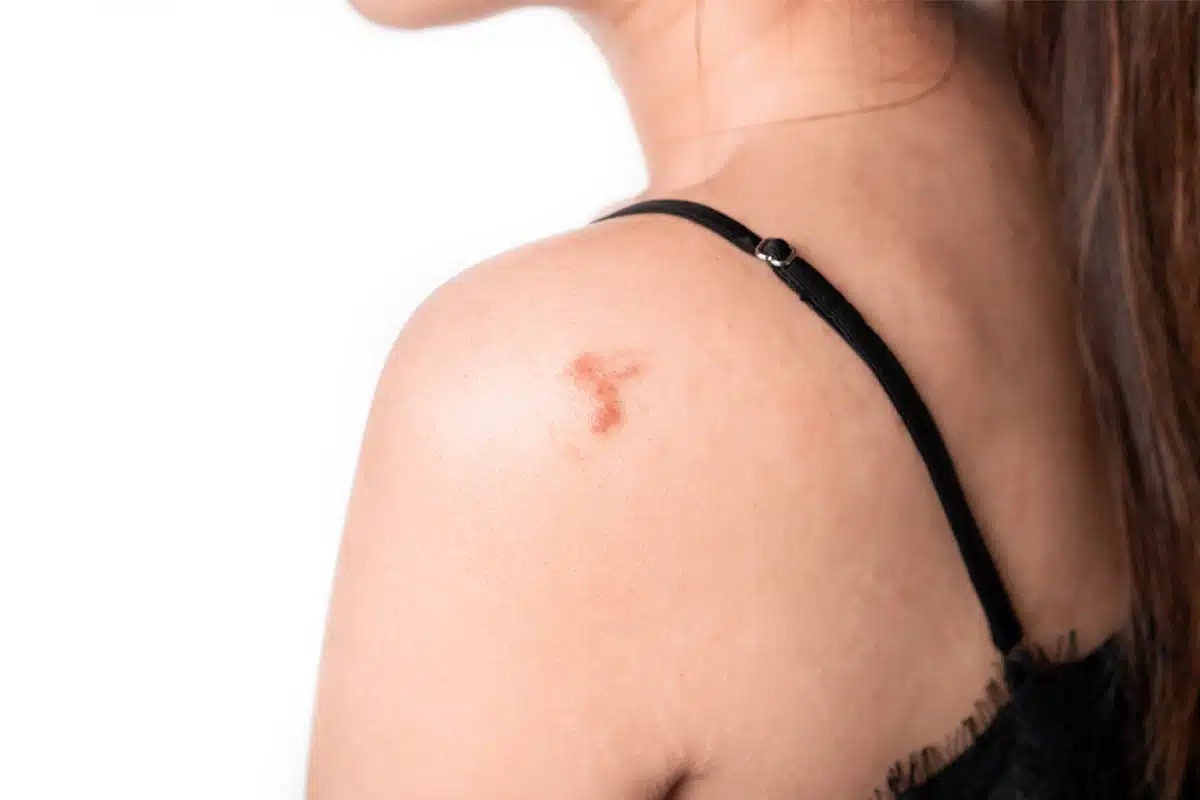
Keloid removal aftercare is an important part of healing after surgery. In addition to helping your incision recover, proper aftercare may also help reduce irritation, support healthy skin repair, and lower the risk of complications.
Because keloids can return after treatment, recovery often involves more than basic wound care. Knowing what to expect, what to avoid, and when to contact your surgeon can help you heal safely and protect your long-term results.
Key Takeaways
- Mild swelling, tenderness, and bruising are common early after keloid removal surgery.
- Follow your surgeon’s wound care instructions closely and keep the incision protected while it heals.
- Avoid activities, friction, or pressure that place unnecessary stress on the treated area.
- Recurrence prevention may include silicone, pressure therapy, steroid injections, radiation, or other treatments based on your surgeon’s plan.
- Contact your surgeon if you notice worsening redness, pus, fever, wound opening, or other rapidly worsening symptoms.
What to Do After Keloid Removal Surgery
Certain activities and exposures can irritate the surgical site or interfere with healing, so follow your surgeon’s restrictions until you are cleared to resume them.
Wound Care Tips
Proper incision care helps protect the surgical site while the skin heals. Always follow the specific wound care instructions provided by your surgeon, as recommendations may vary depending on the location of the keloid, how the incision was closed, and the type of dressing used.
According to MedlinePlus, patients should keep their hands clean before touching the incision or changing a dressing and should avoid applying antibiotic creams, lotions, or other products unless their surgeon recommends them. Dressings should also be changed according to the surgeon’s instructions.
You may also need to avoid soaking the surgical site in a bath, pool, or hot tub until the incision has healed sufficiently. Your surgeon can tell you when it is safe to shower normally, leave the wound uncovered, or have any non-dissolvable sutures removed.
Attend Follow-Up Appointments
Follow-up visits allow your surgeon to monitor the incision, identify problems early, and adjust your aftercare or recurrence-prevention plan when needed. Keep all scheduled appointments and contact your surgical team if you develop new or worsening symptoms.
Support Healing With Nutrition and Hydration
Good nutrition can support your body as it repairs tissue after surgery. Focus on a balanced diet that includes adequate protein, fruits, vegetables, and other nutrient-rich foods, and stay well hydrated unless your healthcare provider has given you different instructions.
How to Help Prevent a Keloid From Coming Back
Because keloids can return after surgery, recurrence prevention is an important part of aftercare. According to the American Academy of Dermatology, options such as silicone therapy, pressure therapy, steroid injections, and radiation may be used in selected cases to help reduce the risk of recurrence.
Silicone Therapy
Silicone gel or silicone sheets may be recommended after the incision has healed sufficiently. These products are used to help manage scar formation, but they should not be applied over an open wound or scab unless your surgeon specifically instructs you to do so.
Pressure Therapy
Pressure therapy may be helpful for certain types of keloids, particularly those affecting the ears. Specialized pressure earrings or garments may be recommended to place controlled pressure on the treated area. These should only be used according to your provider’s instructions.
Steroid Injections
Corticosteroid injections may be used as part of a postoperative treatment plan to reduce inflammation and excessive scar tissue formation. In some cases, they may also be recommended if early thickening or recurrence begins to develop.
Postoperative Radiation Therapy
For selected patients, radiation therapy may be recommended after keloid removal to help reduce the risk of recurrence. The timing, dose, and treatment area must be carefully planned, and your treatment team can explain whether radiation is appropriate for you based on your individual case. They can also discuss the potential benefits, side effects, and risks before treatment begins.

Leading Experts in Keloid Plastic
Surgery in Miami Beach
What to Avoid After Keloid Removal Surgery
Certain activities and exposures can irritate the surgical site or interfere with healing after keloid removal. Follow your surgeon’s restrictions and avoid the following until you are cleared to resume them.
Smoking and Nicotine
Smoking and nicotine can interfere with wound healing and increase the risk of complications after keloid removal surgery. Avoid them during recovery and let your surgical team know if you use cigarettes, vaping products, nicotine pouches, or other nicotine-containing products.
Strenuous Activities
Avoid strenuous exercise, heavy lifting, and movements that stretch or pull on the surgical area until your surgeon says it is safe to resume them. Excess tension can place stress on a healing incision, and activity restrictions may differ depending on where the keloid was removed, since areas such as the chest, shoulder, abdomen, or ear are affected differently by movement and pressure.
Swimming and Soaking
Avoid swimming, hot tubs, and soaking the surgical area until your surgeon confirms that the incision has healed enough for these activities. Showering recommendations may vary depending on the type of dressing and how the incision was closed, so follow the specific instructions provided by your surgical team.
Sun Exposure
Protecting your skin from direct sunlight is essential while your wound heals after keloid removal surgery. UV exposure can contribute to discoloration and make a healing scar more noticeable. Keep the site covered when outdoors and avoid tanning beds completely. Once your surgeon clears you, use gentle sunscreen to help maintain an even tone as your skin continues to recover.
Avoid Trauma or Irritation to the Healing Area
Protect the treated area from scratching, picking, rubbing, tight clothing, and other sources of friction while it heals. Avoid new piercings, tattoos, or other procedures involving the area until your surgeon confirms it is safe.
Can You Wear Earrings After Keloid Removal?
If your keloid was removed from the ear, avoid wearing regular or decorative earrings until your surgeon confirms that the area has healed sufficiently, since pressure and friction can irritate the surgical site. Pressure earrings are different and may sometimes be prescribed as part of a recurrence-prevention plan after ear keloid treatment, so do not begin using them on your own.
Signs of Infection After Keloid Removal Surgery
Some swelling, tenderness, and discomfort can occur as the surgical site heals. However, symptoms that worsen rather than improve may indicate an infection or another wound-healing problem.
Watch for:
- Thick yellow, green, or cloudy drainage or pus
- Increasing redness that spreads beyond the surgical area
- Worsening warmth or tenderness
- Persistent or increasing swelling
- Pain that becomes more intense
- Fever or feeling generally unwell
- An unusual or unpleasant odor
- An incision that begins to open or separate
- Sutures or staples that come out earlier than expected
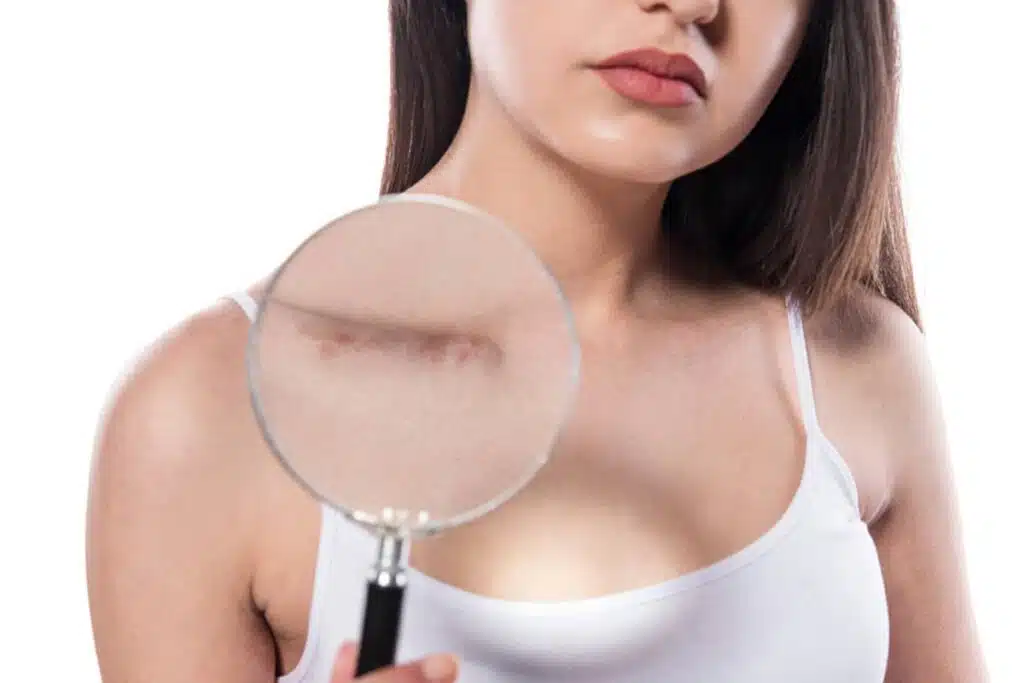
According to MedlinePlus, if you notice worsening wound symptoms, abnormal drainage, wound separation, or sutures that come out too soon, contact your surgical team promptly for guidance.
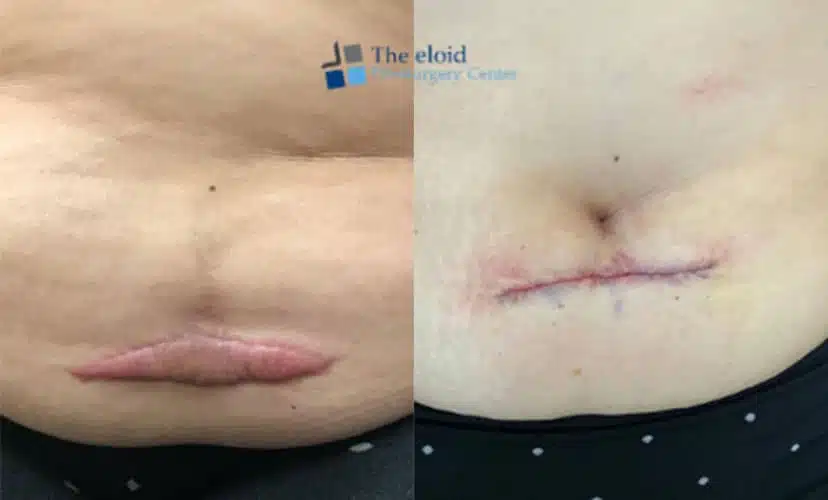
BEFORE & AFTER GALLERY
Natural & Unparalleled Results
What if the Keloid Starts to Come Back?
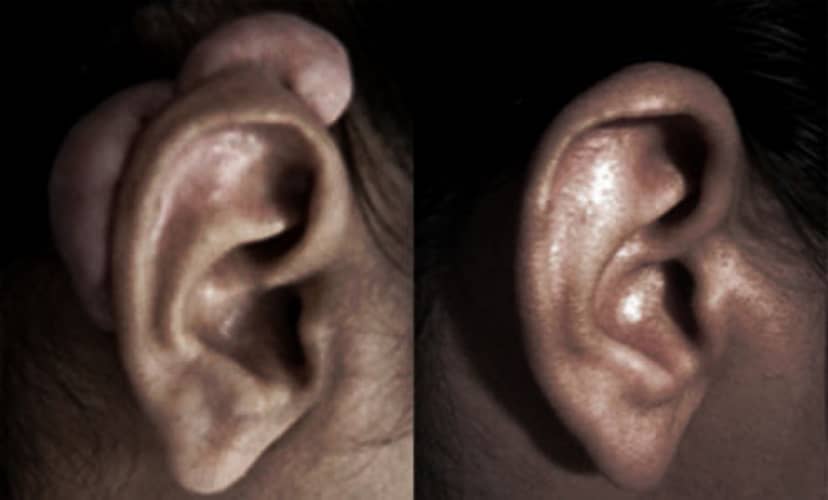
Even with careful aftercare, a keloid may sometimes begin to return. Signs can include progressive thickening, firmness, itching, tenderness, or raised scar tissue around the treated area. If you notice these changes, contact your surgeon for an evaluation rather than waiting for the scar to become more established.
Treatment for a recurrent keloid depends on its size, location, previous treatments, and how quickly it is developing. Options may include corticosteroid injections, pressure therapy, laser treatment, radiation, repeat surgery, or a combination of approaches.
Schedule a Consultation
If you are preparing for keloid removal surgery or have questions about your recovery, our team can provide personalized aftercare guidance based on your treatment and healing needs. To schedule a consultation, call 833-453-5643 or visit our contact page.
Frequently Asked Questions About Keloid Removal Recovery
No. Pus is not considered a normal part of healing and may indicate an infection. Contact your surgeon if you notice thick yellow or green drainage, worsening redness, increasing pain, fever, or other concerning changes around the incision.
Healing time varies depending on the size and location of the keloid, how the incision was closed, and whether additional treatment is part of your care plan. Your surgeon can give you a more accurate recovery timeline based on your procedure.
Yes. Keloids can recur after surgical removal, which is why your surgeon may recommend additional measures such as silicone therapy, pressure therapy, steroid injections, radiation, or close follow-up depending on your individual case.
Activity restrictions depend on the location of the incision and how it is healing. Avoid exercise, heavy lifting, or movements that stretch or place pressure on the surgical area until your surgeon confirms it is safe to resume them.
Avoid regular or decorative earrings until your surgeon confirms that the ear has healed sufficiently. Pressure earrings are different and may sometimes be prescribed as part of a recurrence-prevention plan, so use them only if recommended by your provider.
Yes. As with other surgical incisions, infection can occur if bacteria enter the wound. Warning signs can include pus, spreading redness, worsening swelling or pain, fever, unpleasant odor, or an incision that begins to open. Contact your surgical team if you notice these symptoms.